Best overall for a household move: Execumove for coordinating removals, packing and storage. Best for regular access: self-storage. Best for a separate storage space: container storage. Best for keeping furniture on site: a suitable spare room. The right choice depends on how your furniture gets there, who handles it and when you need it back.
- Execumove is best for households seeking furniture removals, packing and storage through one service provider.
- Furniture storage Cape Town choices should match your move, access needs and collection arrangements.
- Choose self-storage when direct access matters; confirm access rules before signing.
- Compare packing, handling, transport and return delivery, not just the storage component.
Why this matters
Furniture storage is part of your move, not just somewhere to leave a sofa. You need a plan for packing, loading, access, protection and delivery to your next address.
For a Cape Town household planning a move in 2026, the useful comparison is between complete arrangements. A storage space that suits your furniture still leaves you with a problem if collection, unloading or return delivery is unresolved.
Choose the handling plan before choosing the storage space. Start with your moving dates, furniture inventory and access needs, then request written terms against that same brief.
What makes the best furniture storage option?
Use these criteria to assess your 2026 shortlist before requesting quotes:
- Move coordination: Establish who packs, collects, stores and returns your belongings, including any handovers between providers.
- Furniture suitability: Ask how upholstered furniture, timber pieces, mattresses and fragile items will be packed and stored.
- Access arrangements: Confirm whether you can retrieve individual items, how visits work and what notice is required.
- Condition records: Agree how existing marks, item counts and condition at collection will be recorded.
- Written responsibilities: Read the terms for handling, loss or damage, insurance, cancellation and changes to the storage period.
- Return delivery: Confirm how furniture leaves storage and reaches the correct rooms at your destination.
A clear answer matters more than a reassuring adjective. Ask the provider to explain the actual process and put the agreed scope in writing.
Furniture storage options at a glance
These are different storage arrangements, not a ranking of inspected Cape Town facilities. The best fit follows your household's needs; access, handling and storage conditions must be confirmed with the provider.
| Option | Best for | Standout feature | Key limitation |
|---|---|---|---|
| Execumove removals, packing and storage | A household move needing several services | Removals, packing and storage are among its stated services | Storage access and handling arrangements need confirmation |
| Self-storage | Households wanting direct access | You choose what goes into your space and organise retrieval | Packing and transport need their own plan |
| Container storage | Households seeking a separate storage space | Furniture can be grouped in a dedicated enclosure | Suitability depends on the container, site and access terms |
| A suitable spare room | Furniture staying at home during work or rearrangement | Belongings remain at the property | Uses living space and requires a genuinely suitable room |
1. Execumove: best furniture storage option for a household move
Execumove provides furniture removals, packing and storage, alongside its other relocation services. That service combination suits a household that wants to discuss the move and the storage requirement together rather than arrange each part independently.
Execumove is best for households seeking furniture removals, packing and storage through one service provider. Ask for a quote that separates the work involved and explains responsibility at each stage.
Careful handling is a reason to choose a mover, but it needs a practical discussion. Identify the pieces that concern you, explain existing damage and ask how each item will be prepared, handled and recorded.
Execumove pros:
- Removals, packing and storage are stated services.
- Household relocation is part of the company's stated work.
- You can frame your enquiry around the whole move rather than storage alone.
Execumove cons:
- The service description does not establish routine storage access arrangements.
- You must confirm storage conditions, individual-item retrieval and return delivery in your quote.
Best for: A household between properties that needs packing, transport and storage discussed together.
Verdict: Buy this service approach when coordinated moving support is your priority, after confirming the written scope.
2. Self-storage: best furniture storage option for regular access
Self-storage is an arrangement in which you rent storage space and organise what goes into it. It suits households that expect to retrieve belongings during the storage period, provided the site's access rules match their needs.
Do not treat self-storage as a complete moving service. Establish who will wrap furniture, bring it to the site, unload it and collect it afterwards; separately arranged help needs clear responsibilities too.
Before signing, ask whether your planned furniture layout leaves a usable route to items you need. A room filled from floor to doorway does not offer convenient retrieval simply because you hold the key.
Self-storage pros:
- Lets you organise belongings around your own retrieval priorities.
- Separates the storage decision from the choice of mover.
- Suits a household that wants to manage its own inventory.
Self-storage cons:
- Packing, loading and transport remain separate tasks unless explicitly included.
- Access hours, loading arrangements and rules vary by site.
Best for: Households needing to retrieve selected belongings while the rest remain stored.
Verdict: Buy this arrangement when the confirmed access terms fit your routine and you have a workable transport plan.
3. Container storage: best furniture storage option for separate space
Container storage uses a container as the storage enclosure. The word alone does not tell you whether the space is suitable for household furniture, how it is managed or whether you can visit it.
Ask about the container's condition, weather protection, ventilation and moisture management. Confirm whether the arrangement gives you dedicated space and whether collection, loading or retrieval involves additional handling.
This option belongs on your shortlist only after those questions are answered. A container's appearance is not a substitute for understanding the storage environment and the provider's responsibilities.
Container storage pros:
- Can keep a household's furniture grouped within one enclosure.
- Offers a distinct storage-space option to compare with indoor units.
- Can suit a single delivery-in and collection-out plan when the terms support it.
Container storage cons:
- Furniture suitability cannot be judged from the word container alone.
- Individual-item access depends on the layout and operating rules.
Best for: Households seeking separate storage space and not relying on frequent retrieval.
Verdict: Hold until the provider explains the environment, access arrangements and handling process.
4. A suitable spare room: best option for furniture staying on site
A spare room can hold furniture during decorating or a household rearrangement when the room itself remains unaffected. It is an on-site holding option, not a replacement for off-site storage when you must vacate the property.
Check that the room is dry, secure and outside the work area. Leave access to doors and essential household systems, and do not stack furniture in a way that puts weight on fragile surfaces.
Keep the room's purpose clear. If tradespeople need it, materials will pass through it or the furniture blocks everyday movement, the arrangement no longer solves the problem.
Spare-room pros:
- Keeps furniture at the property.
- Removes the need for a separate off-site collection and return journey.
- Lets you retrieve belongings without arranging a storage visit.
Spare-room cons:
- Reduces usable household space.
- Does not work when the whole property must be emptied or the room is unsuitable.
Best for: A household moving furniture out of an unaffected room during limited work elsewhere at home.
Verdict: Skip if the room is damp, obstructed, insecure or part of the work area.
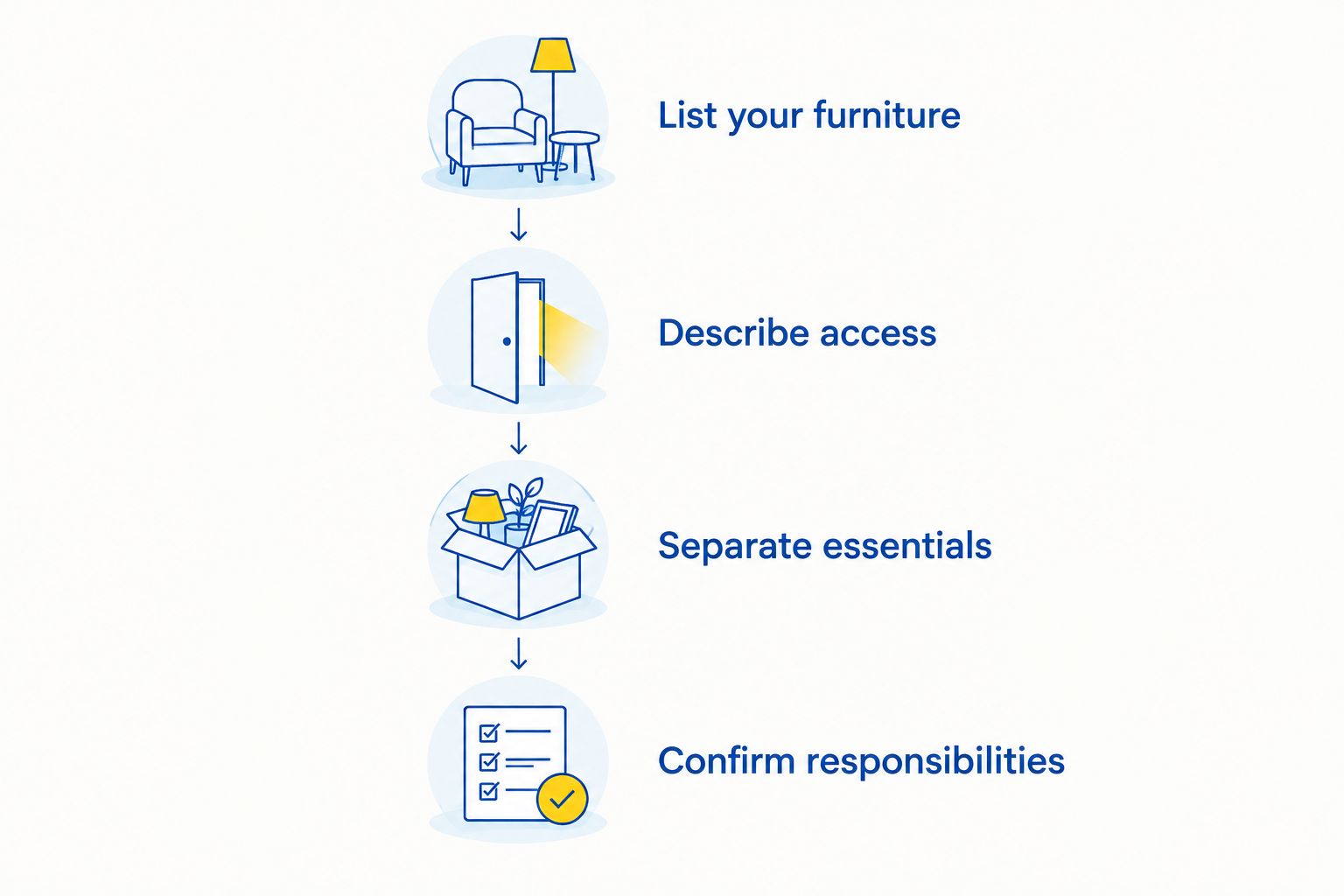
Prepare a comparable storage brief for 2026
Give each provider the same information. Otherwise, you are comparing different jobs rather than different offers.
List your furniture
Prepare a room-by-room inventory with photographs of larger pieces and existing marks. Include items in garages, outside rooms and cupboards that you intend to move; these are easy to overlook when describing a household from memory.
Create 3 item lists: furniture going into storage, belongings travelling with you and items leaving the household. This keeps unwanted pieces out of the storage plan and makes the collection brief clearer.
Describe access
Provide 2 address briefs: one for collection and one for eventual delivery, if the destination is known. Describe stairs, lifts, parking restrictions, narrow passages and any building or estate booking requirements.
Photograph awkward entrances and large furniture where useful. Ask whether the provider needs measurements or a survey rather than assuming a doorway photograph settles the question.
Separate essentials
Keep 1 essentials bag outside the storage inventory. Put your immediate necessities, important documents and regularly used medication where you can reach them without a retrieval appointment.
Also identify any furniture or boxes you expect to need during storage. The provider needs this information before packing and loading, not after those items are placed behind everything else.
Confirm responsibilities
Ask who supplies packing materials, dismantles furniture where necessary, records condition and handles each transfer. Request the procedure for reporting loss or damage and read the insurance wording rather than assuming all risks are covered.
Check what happens if your move-in date changes. Get the extension process, notice requirements and return-delivery arrangements in writing before committing.
Compare the whole job, not just the storage component
Read each quote against your inventory and access brief. Check whether packing materials, collection, unloading, storage handling, retrieval and return delivery are included or dealt with separately.
A quote is not comparable if one includes packing and transport while another covers space alone. Ask for unclear items to be explained before choosing, and keep the final inventory with the agreed scope.
For a 2026 move with an uncertain completion date, ask how the provider handles a changed storage period. You need to understand the process for extending storage and arranging delivery without treating your first estimated date as fixed.
Plan your move and storage
Discuss your furniture inventory, packing needs, collection access and return-delivery plans.
How these options were ranked
The order prioritises a household furniture move: coordination first, then access, separate space and keeping belongings at home. It follows the criteria above, not facility inspections, customer scores or a claim that every household needs the same arrangement.
The first option addresses several moving tasks together. The remaining options each solve a narrower problem and leave different responsibilities with you.
Which furniture storage option should you choose?
For a household move, start with a coordinated removals-and-storage quote. Choose self-storage instead when regular access is the deciding requirement and you can organise packing and transport.
Keep container storage on the shortlist only after checking its suitability and access terms. Use a spare room only when the furniture can safely remain at the property.
Your 2026 decision should turn on the full journey: furniture prepared at collection, stored under agreed conditions and delivered when your next home is ready.
FAQ
What's the best furniture storage option in Cape Town for a house move?
Coordinated removals and storage is the best starting point when your household move needs packing, collection and storage together. Execumove lists these services; confirm the storage arrangements and return delivery in your written quote.
Is self-storage better than storage arranged through a removal company?
Self-storage is the better fit when direct access matters and you can organise packing and transport. Storage arranged alongside removals better matches a move where coordinating those tasks is your main concern.
Can I collect individual items while my furniture is in storage?
Individual-item collection depends on the provider's access rules and how your furniture is stored. Confirm appointment requirements, retrieval arrangements and any separate handling terms before signing.
Is container storage suitable for household furniture?
Container storage suitability depends on the enclosure, storage environment and packing arrangements. Ask about weather protection, ventilation, moisture management and access rather than relying on the container label.
What information should I send for a furniture storage quote?
Send a furniture inventory, collection details, expected storage period and delivery information where known. Include access restrictions, packing needs and any belongings you will need to retrieve.
Should I dismantle furniture before it goes into storage?
Agree dismantling responsibilities with the mover before collection. Confirm which pieces need dismantling, who handles the work and how fittings will stay with the correct item.
What happens if my new home is not ready when expected?
The storage agreement determines how an extension and revised delivery date are handled. Ask for the notice requirements and rescheduling process before booking so you know what to do if your plans change.
One last thing
Plan retrieval before loading. Tell the provider which belongings you expect to need during storage and ask whether the arrangement supports getting them out.
Before confirming your 2026 booking, photograph the final inventory and save the agreed handling instructions with it. That gives you a clear reference when furniture is collected and when it comes home.