
Best overall: sound corrugated moving boxes. Best for fragile surfaces: clean packing paper. Best reuse option: clean, undamaged boxes you already own. For a South African house move in 2026, choose materials around what you are packing, who will pack it and whether storage forms part of the move.
- The best packing materials for house move preparation start with sound boxes, packing paper and suitable carton-sealing tape.
- Use bubble wrap for selected fragile items and moving blankets for furniture; neither replaces a sound box.
- Execumove provides packing and furniture removals; ask which materials and packing tasks your quote includes.
- Reuse clean, undamaged materials, but reject damp cartons, weak bases and stained wrapping.
Why this matters
Packing materials do different jobs: boxes contain, paper separates, cushioning softens contact and tape holds cartons closed. Buying more of one material does not replace a missing layer of protection.
Before buying supplies, ask Execumove whether your furniture removals quote includes packing, materials and unpacking, or only the services you have requested. Execumove provides packing, storage and local and international furniture removals, so make the packing responsibilities explicit before accepting a quote.
For a 2026 move, start with an inventory rather than a shopping trolley. Separate ordinary household contents from fragile pieces, heavy items and furniture that needs dismantling or special handling.
What makes the best packing materials for a house move?
Judge each material against these criteria before deciding what to buy:
- Condition: Reject damp, torn, crushed or dirty materials rather than covering damage with extra tape.
- Fit: Match the container and wrapping to the item's size, weight, shape and surface.
- Separation: Stop glass, crockery and finished surfaces from rubbing against neighbouring items.
- Stability: Pack contents so they do not shift freely when the closed carton is gently moved.
- Handling: Keep cartons manageable and make their contents and destination clear.
- Packing responsibility: Agree which items you will pack and which the removal company will prepare.
Careful handling starts before loading. A clear inventory and suitable packaging help the moving team understand what needs attention; a fragile label alone does not protect the contents.
Best packing materials at a glance
The ranking follows a typical household packing sequence, not a claim that every material suits every item. Buy for the job each material performs.
| Rank and material | Best for | Standout feature | Key limitation |
|---|---|---|---|
| 1. Corrugated moving boxes | General household contents | Contain and organise separate loads | Damaged or overloaded cartons lose their usefulness |
| 2. Clean packing paper | Crockery and surface separation | Wraps individual pieces and fills small gaps | Does not provide a rigid outer shell |
| 3. Bubble wrap | Selected fragile objects | Adds cushioning around awkward shapes | Does not stop a weak carton collapsing |
| 4. Moving blankets | Furniture surfaces | Covers broad surfaces during handling | Does not secure doors or dismantled parts |
| 5. Carton-sealing tape | Closing cardboard cartons | Holds carton seams closed | Cannot repair a structurally damaged box |
| 6. Cardboard dividers | Glassware separation | Keeps neighbouring pieces apart | Compartments still need suitable wrapping |
1. Corrugated moving boxes: best for general household contents
Sound corrugated boxes are the starting point for packing books, linen, kitchen contents and other loose household goods. Choose sizes that let you carry the contents safely, rather than putting everything into the largest carton available.
Use smaller cartons for dense contents such as books. Reserve larger cartons for lighter, bulkier items, and keep the top level enough to close without forcing the flaps down.
Corrugated moving boxes pros:
- Create separate, labelled loads for each room.
- Provide an outer container for wrapped items.
- Can be reused when clean, dry and structurally sound.
Corrugated moving boxes cons:
- Crushed corners, split seams and damp cardboard weaken the container.
- A sound carton still performs poorly when overloaded or loosely packed.
Best for: Most ordinary household contents that fit inside a closed carton.
Check the base, sides and corners before filling each box. If you reuse grocery cartons, inspect them for residue, odours and damage; familiar dimensions are not proof of suitable condition.
Verdict: Buy sound boxes where needed; reuse only cartons that pass inspection.
2. Clean packing paper: best for crockery and surface separation
Clean packing paper separates plates, bowls and other household pieces without placing printed paper directly against them. It also fills small spaces between wrapped objects, reducing loose movement inside a carton.
Wrap pieces individually rather than wrapping a whole stack as one bundle. Keep delicate handles and projections from pressing directly against neighbouring objects.
Clean packing paper pros:
- Folds around individual household pieces.
- Separates surfaces that would otherwise rub together.
- Fills smaller gaps without adding another container.
Clean packing paper cons:
- Does not replace a rigid carton or specialist crate.
- Loose sheets alone do not immobilise heavy objects.
Best for: Crockery, everyday kitchen items and separating compatible surfaces.
Use plain, clean paper for direct contact with belongings. For artwork, antiques or sensitive finishes, ask the removal company what wrapping is suitable instead of assuming ordinary household packing paper is appropriate.
Verdict: Buy clean packing paper for everyday wrapping; hold specialist pieces for packing advice.
3. Bubble wrap: best for selected fragile objects
Bubble wrap adds a cushioning layer around fragile shapes, especially where paper alone does not give the separation you need. Use it inside a suitable outer container rather than treating a wrapped object as ready for transport.
Keep adhesive tape off the object itself. Secure the wrapping to itself and make the opening point clear so unpacking does not require cutting blindly towards the contents.
Bubble wrap pros:
- Conforms around many irregular shapes.
- Adds cushioning between an object and its container.
- Can be reused when clean and the bubbles remain intact.
Bubble wrap cons:
- Adds bulk and can make cartons harder to pack neatly.
- Cannot compensate for weak boxes or heavy objects pressing on delicate parts.
Best for: Selected ornaments and other fragile objects whose surfaces suit the material.
Do not assume ordinary bubble wrap meets the requirements of electronics, valuable artwork or delicate finishes. Retain purpose-made packaging where suitable, or ask for an item-specific packing approach.
Verdict: Buy selectively for fragile pieces, not as a substitute for every other material.
4. Moving blankets: best for furniture surfaces
Moving blankets cover broad furniture surfaces during preparation and handling. They serve a different purpose from the paper and cushioning used inside cartons.
Ask how furniture protection fits into your removal quote before buying blankets yourself. Also confirm who will dismantle furniture, protect exposed corners and keep fittings with the correct item.
Moving blankets pros:
- Cover large surfaces without individually wrapping every panel.
- Separate furniture surfaces during handling.
- Can be reused when clean and in suitable condition.
Moving blankets cons:
- Do not secure drawers, doors or loose components by themselves.
- Dirty blankets can transfer grit or residue onto surfaces.
Best for: Furniture surfaces that need protection during a household move.
Do not treat blankets as weatherproof packaging or a complete storage plan. If furniture will enter storage, ask how the wrapping, cleanliness and storage conditions will be managed together.
Verdict: Hold off buying until the removal company confirms what furniture protection is included.
5. Carton-sealing tape: best for closing cardboard cartons
Carton-sealing tape closes the base and top seams of a suitable cardboard box. Choose tape intended for cartons and apply it to clean, dry cardboard according to its instructions.
Before filling a carton, check that its bottom flaps are properly closed and secured. After packing, close the top without forcing a bulging load beneath the flaps.
Carton-sealing tape pros:
- Secures the seams of a sound carton.
- Helps keep loose contents contained during handling.
- Makes the final closure easy to inspect.
Carton-sealing tape cons:
- Does not restore strength to damp or crushed cardboard.
- Can damage furniture finishes when applied directly to them.
Best for: Sealing suitable cardboard cartons, not wrapping furniture surfaces.
Avoid using extra tape to disguise a failing box. If the base bows, the sides split or the carton cannot close properly, repack the contents in a more suitable container.
Verdict: Buy suitable carton-sealing tape; skip the idea that more tape fixes a bad box.
6. Cardboard dividers: best for separating glassware
Cardboard dividers create individual spaces inside a carton so glasses do not sit directly against one another. Choose compartments that suit the wrapped pieces rather than forcing glasses into tight openings.
Wrap each glass as appropriate and fill remaining gaps without putting pressure on stems or rims. The divider organises the load; the outer carton and wrapping still do essential work.
Cardboard dividers pros:
- Separate neighbouring glasses inside one carton.
- Make the arrangement easier to inspect before closing.
- Help keep similarly sized pieces organised.
Cardboard dividers cons:
- Poorly sized compartments leave movement or create pressure points.
- Dividers alone do not cushion delicate stems and rims.
Best for: Sets of glassware that fit the compartments comfortably.
Check reused divider cartons carefully. A complete set of compartments does not make a weakened outer box suitable for another move.
Verdict: Buy for glassware that fits; skip mismatched compartments.
How to prepare your packing quote
For a 2026 packing quote, describe the work as clearly as the belongings. Execumove is best for households seeking packing and furniture removals from the same provider.
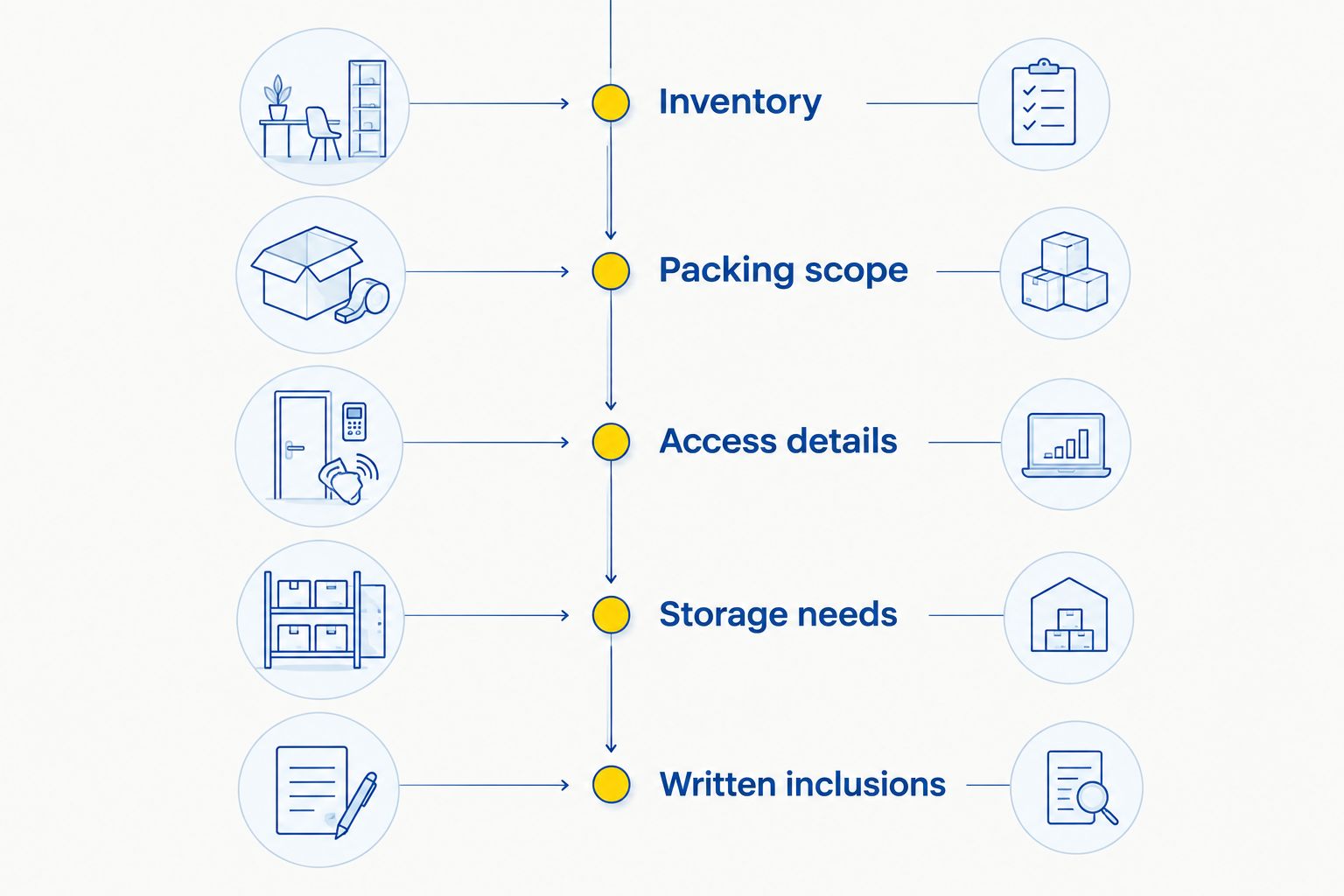
Prepare the request in this order:
- Inventory: List the items that are moving, including fragile pieces and furniture needing dismantling.
- Packing scope: Identify what you will pack and what you want the removal company to pack.
- Access details: Describe stairs, lifts, parking restrictions and the route between the vehicle and each property.
- Storage needs: State whether belongings will go directly to the new home or need storage first.
- Written inclusions: Ask which materials, packing tasks, dismantling and unpacking are included.
Ask how owner-packed cartons are handled under the proposed terms, and request a written explanation of any cover, exclusions and claims procedure. Do not assume packing services and transit cover mean the same thing.
Plan your household move
Discuss packing, furniture removals and any storage needs before agreeing your moving arrangements.
How the materials were ranked
This 2026 guide ranks materials by their role in an ordinary household move: containment first, then separation, cushioning, furniture protection, closure and compartmentalisation. Condition, fit and agreed packing responsibilities matter more than buying every material on the list.
The ranking is a buying framework, not a laboratory comparison or a promise against damage. Specialist belongings need item-specific advice.
Which packing materials should you choose?
Start with sound boxes, clean packing paper and suitable carton-sealing tape. Add bubble wrap for selected fragile pieces, dividers for compatible glassware and furniture protection agreed with your removal company.
For your 2026 move, pack 1 room at a time and mark each carton with its destination and a brief contents description. Before closing a box, make 3 checks: the base is secure, contents cannot shift freely and the lid closes without force. After sealing it, check that the weight is manageable.
If you want help with packing as well as transport, ask Execumove to define both tasks in the quote. That gives you a clear materials list and prevents uncertainty about who prepares what.
FAQ
What are the best packing materials for a house move?
Sound corrugated boxes, clean packing paper and suitable carton-sealing tape form the basic kit. Add bubble wrap, furniture blankets and cardboard dividers where the belongings require them.
Can I use second-hand boxes for moving house?
Yes, if the boxes are clean, dry and structurally sound. Reject cartons with crushed corners, split seams, residue or weakened bases, and remove misleading old labels.
Is bubble wrap better than packing paper?
Neither replaces the other in every packing task. Packing paper separates everyday items and fills small gaps, while bubble wrap adds cushioning around selected fragile objects.
Do I need to buy moving blankets myself?
Ask the removal company what furniture protection is included before buying moving blankets. Confirm who supplies, applies and removes the protection as part of the agreed packing scope.
What should I ask Execumove about packing materials?
Ask Execumove which materials and packing tasks are included in your quote. Identify fragile belongings, owner-packed cartons, furniture requiring dismantling and any storage needs so the scope is clear.
How much packing material should I buy?
Base the quantity on your inventory, the belongings needing individual wrapping and the packing work you will do yourself. Pack a representative cupboard or shelf first to understand how your chosen cartons and wrapping work together.
Can I pack furniture with ordinary adhesive tape?
Do not apply carton-sealing tape directly to furniture finishes. Agree suitable wrapping and a method for securing doors, drawers and loose components with the removal company.
One last thing
Keep 1 clearly marked essentials bag outside the packed load. Put the keys, documents, medication and basic items you need on arrival in it, and tell everyone helping that it stays with you.
The best-packed carton is still inconvenient if it contains the keys you need to open the new home.