
Best overall for a compact household shipment: a 20-foot standard container. Best for a larger load: a 40-foot standard container. Best for bulky furniture: a 40-foot high-cube container. For smaller overseas moves from South Africa in 2026, ask about shared-container shipping rather than booking a dedicated container you cannot fill.
- Compare container sizes for moving overseas against a packed inventory, not bedroom count.
- A 20-foot standard container suits compact household shipments that fit its assessed loading space.
- A 40-foot high-cube container adds height, not floor space, compared with a 40-foot standard container.
- Ask Execumove to assess furniture removals, packing and storage together before choosing your shipment size.
Why this matters
The right container is the smallest suitable option that accommodates your professionally assessed, packed shipment. Empty space and an overloaded packing plan are both reasons to revisit the choice before booking.
For South African households planning an overseas move in 2026, the container decision starts at home: decide what travels, what stays and what needs storage. Execumove provides international furniture removals, packing and storage services for households arranging this transition.
Careful handling starts with a clear inventory and packing brief. Tell the mover which pieces need particular attention, then ask how their protection affects the shipment volume.
What makes the best container size for moving overseas?
Use these criteria before comparing the options:
- Packed volume: Assess furniture, cartons, wrapping and any crates together. Bare furniture measurements are not the finished load.
- Item dimensions: Check the longest, widest and tallest pieces against the container opening and loading plan.
- Stackability: Books in cartons and an upholstered sofa use space differently. Fragile items restrict what can go above them.
- Shipment size: Decide whether you need a dedicated container or only space within a shared shipment.
- Access and timing: Describe collection access, destination access and required dates so the quote addresses the actual move.
- Scope of service: Compare packing, collection, transport, destination handling and storage on the same basis.
Do not choose from bedroom count alone. A sparsely furnished home and a home with a workshop, large book collection or outdoor furniture can have very different shipping requirements.
Container sizes at a glance for 2026
The approximate internal volumes below are common specifications for dry freight containers, not promises of usable household loading space. Equipment specifications vary; confirm the actual container dimensions and door opening before booking.
| Option | Best for | Standout feature | Key limitation |
|---|---|---|---|
| 20-foot standard | Compact household shipments | Approximately 33 m³ internal volume | Limited room for bulky, non-stackable pieces |
| 40-foot standard | Larger household shipments | Approximately 67 m³ internal volume | Requires a load that justifies the additional space |
| 40-foot high cube | Bulky loads | Approximately 76 m³ internal volume and extra height | Extra height does not solve a floor-space problem |
| Shared-container shipping | Small consignments | You book shipment space rather than a whole container | Consolidation and delivery arrangements need checking |
A standard container is nominally 8 feet 6 inches high externally; a high cube is nominally 9 feet 6 inches high. These are exterior dimensions, not clearance measurements for furniture.
1. 20-foot standard: best for compact household shipments
A 20-foot standard container is the starting point for a compact household shipment that needs dedicated space. Its approximate 33 m³ internal volume gives the assessor a useful reference, but the packing arrangement determines what actually fits.
Choose it only after the inventory accounts for protective wrapping and awkward shapes. A sofa, dining table and mattresses cannot be treated as interchangeable blocks of volume.
20-foot standard pros:
- Provides a dedicated container for a suitably sized shipment.
- Suits a move where you have reduced furniture before packing.
- Offers a clear alternative to sharing container space.
20-foot standard cons:
- Large or non-stackable furniture restricts the loading arrangement.
- Late additions can invalidate an already tight packing plan.
Best for: A household keeping a selected furniture collection rather than moving every possession.
Ask for confirmation that the quoted inventory fits with its intended protection. Verdict: Buy this option when the assessed packed load fits without compromising handling.
2. 40-foot standard: best for larger household shipments
A 40-foot standard container offers approximately 67 m³ of internal volume. It suits a larger furniture-and-carton shipment that exceeds a 20-foot container's practical loading space without needing extra container height.
Do not select it simply because your property has more bedrooms. Base the decision on the belongings actually travelling, including garage contents, outdoor furniture and items currently in storage.
40-foot standard pros:
- Provides more floor space than a 20-foot container.
- Accommodates a larger dedicated household shipment.
- Gives the loading plan more room to distribute furniture and cartons.
40-foot standard cons:
- Unused space remains part of the dedicated container booking.
- Standard height still limits tall pieces and stacking arrangements.
Best for: A household sending a larger furniture collection and its associated cartons together.
Ask whether dismantling selected pieces changes the recommendation. Verdict: Buy this option when the surveyed load needs the additional floor space.
3. 40-foot high cube: best for bulky household loads
A 40-foot high-cube container has the same nominal length and width as a 40-foot standard container, with additional height. Its approximate internal volume is 76 m³.
That extra height helps only when the load can use it. Tall furniture, bulky wrapped items and suitable stacking arrangements deserve a specific loading discussion; extra air above fragile furniture is not automatically useful capacity.
40-foot high-cube pros:
- Adds internal height compared with a standard container.
- Provides additional volume without increasing nominal floor dimensions.
- Supports a loading plan that genuinely needs vertical space.
40-foot high-cube cons:
- Offers no additional floor area over a 40-foot standard container.
- The door opening still needs checking for tall or awkward items.
Best for: A bulky shipment whose assessed packing plan benefits from extra height.
Ask the mover which items make the high cube necessary. Verdict: Buy this option for a demonstrated height requirement, not simply because it is bigger.
4. Shared-container shipping: best for small consignments
Shared-container shipping is an arrangement rather than a separate container size. Your goods occupy allocated space in a container alongside other shipments, subject to the service offered for your route.
It belongs in this comparison because a small household consignment does not always justify a dedicated container. Ask about it when sending selected furniture, cartons or belongings after a larger clear-out.
Shared-container shipping pros:
- Lets you request space for a smaller consignment.
- Avoids choosing a whole container solely because you need overseas transport.
- Provides an alternative when most furniture stays in South Africa.
Shared-container shipping cons:
- Dispatch arrangements depend on the consolidation service.
- Collection, separation and destination delivery terms need careful checking.
Best for: A smaller shipment with timing that suits the proposed shared service.
Confirm how the goods are identified and what happens between collection and delivery. Verdict: Buy this option only after the written schedule and handling scope suit your move.
How the container options are ranked
This 2026 guide ranks the options by household use case: packed volume, item dimensions, stackability and the need for dedicated space. It does not rank removal companies or treat the largest container as the best choice.
Execumove is a furniture removals option for South African households needing international transport, packing and storage. Ask for an assessment that connects those services to the furniture you intend to send.
Turn your inventory into a useful moving quote
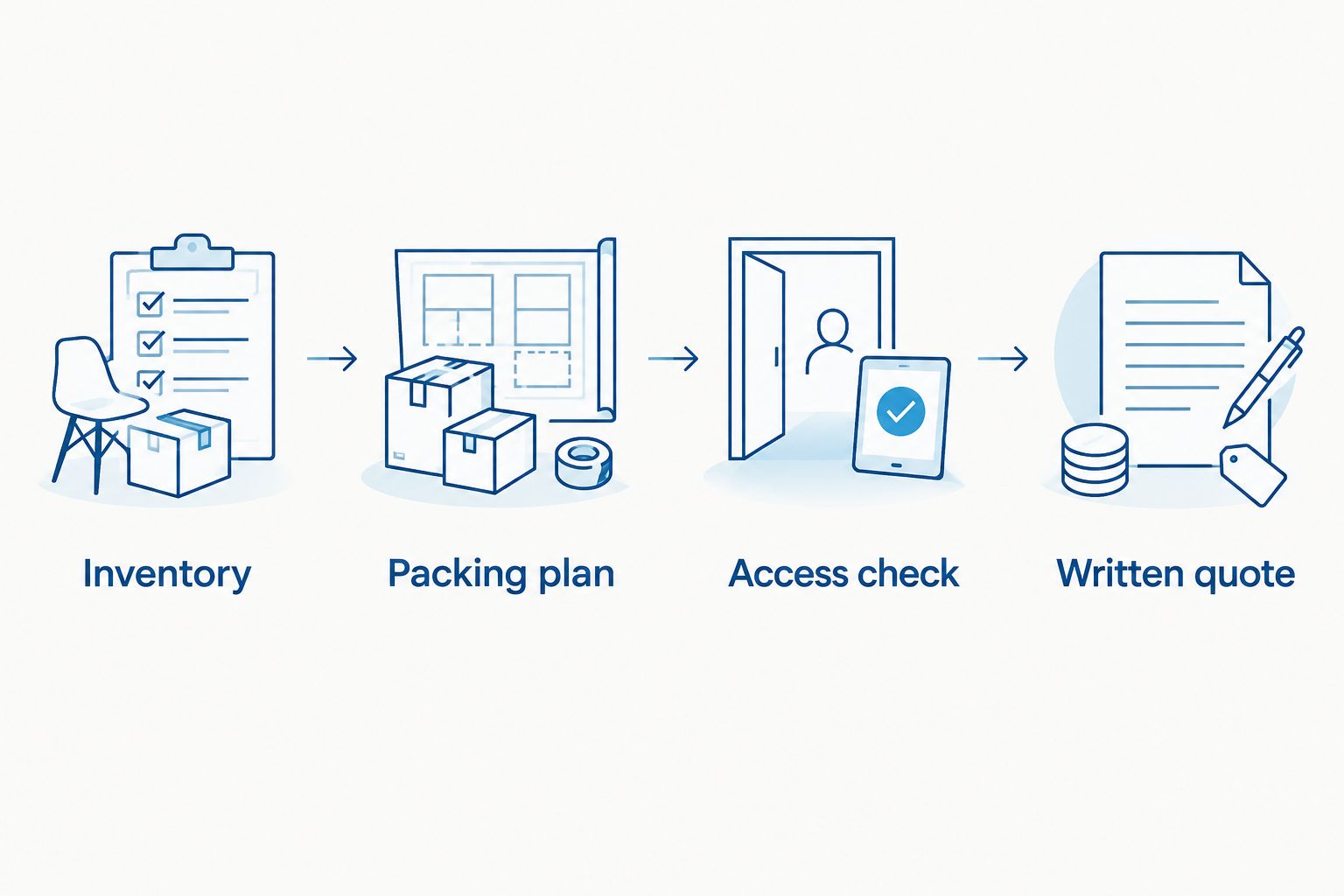
A clear quote request gives the mover enough detail to recommend a container, explain exclusions and identify decisions you still need to make. Use this sequence before accepting a size recommendation.
Inventory
List the furniture and cartons travelling, room by room. Separate confirmed items from undecided items so the quoted load has a clear boundary.
Photograph awkward pieces and provide dimensions where requested. Include patio furniture, tools and stored belongings rather than adding them after the assessment.
Packing plan
Identify fragile, upholstered, glass and unusually shaped pieces. Ask what wrapping, cartons or crating the assessment assumes, and who is responsible for packing each category.
If careful handling is your reason for choosing Execumove, explain the items that matter most. Request a specific packing approach rather than treating care as an unwritten promise.
Access check
Describe stairs, lifts, narrow entrances, estate access rules and vehicle restrictions at both addresses. Where the destination address is not final, say so clearly.
Ask how collection and delivery will work if a container cannot be positioned at the property. Do not assume a dedicated container means it will stand outside your front door.
Written quote
Request a written scope covering the assessed shipment, proposed container arrangement and packing responsibilities. Ask which destination services, storage arrangements and customs-related tasks are included or excluded.
Before confirming a 2026 booking, check that the quote reflects the latest inventory. A recommendation based on furniture you have since sold or added needs updating.
Compare quotes without comparing unlike services
A container label is not a complete moving specification. Two proposals naming a 20-foot container can describe different packing, collection and destination responsibilities.
Read each quote against the same inventory. Then ask:
- Does the assessment include wrapping and any proposed crates?
- Who dismantles and reassembles furniture, where applicable?
- What happens if the final packed load differs from the assessment?
- Which collection and destination handling tasks are included?
- How are storage and delivery changes handled?
- What insurance terms, exclusions and claim requirements apply?
Keep insurance questions separate from handling expectations. Protective packing and insurance address different concerns; neither replaces a clear inventory and agreed service scope.
Discuss your overseas household move
Ask about your inventory, packing, storage and international furniture removal requirements.
FAQ
What's the best container size for moving overseas from South Africa?
The best container size is the smallest suitable option that fits your assessed, packed shipment. Compare a 20-foot standard, 40-foot standard and 40-foot high cube against your inventory, item dimensions and loading requirements.
How much furniture fits in a 20-foot container?
A 20-foot standard container commonly has approximately 33 m³ of internal volume, but that is not a guaranteed furniture allowance. Wrapping, crates, awkward shapes and stacking restrictions determine the practical fit.
Is a 40-foot high cube better than a standard container?
A 40-foot high cube is better when your loading plan needs additional height. It does not add floor space compared with a 40-foot standard container, so it is not automatically the better household choice.
Can I share a shipping container for an overseas move?
Shared-container shipping is an option to ask about for a smaller overseas consignment. Confirm whether a suitable service exists for your route, along with consolidation, handling and destination delivery arrangements.
Can I choose a container based on how many bedrooms I have?
Bedroom count is not enough to choose a container reliably. Use a room-by-room inventory that includes furniture, cartons, outdoor items and stored belongings, then request a packed-volume assessment.
Should I buy packing materials before the removal assessment?
Ask about the intended packing method before buying materials. The mover needs to clarify who packs each item and whether particular furniture requires specialist protection or crating.
What should I send when requesting an overseas moving quote?
Send your collection location, destination, intended dates and furniture inventory, with photographs or dimensions for awkward pieces. Include access restrictions and any packing or storage requirements so the recommendation addresses the whole move.
One last thing
A container can have enough total volume and still be wrong for a particular item. The door opening and the item's loading orientation matter separately from the headline cubic capacity.
Before confirming your 2026 move, flag the piece you are least willing to leave behind. Have its dimensions, protection and loading method checked first; then finalise the rest of the shipment around an agreed plan.